

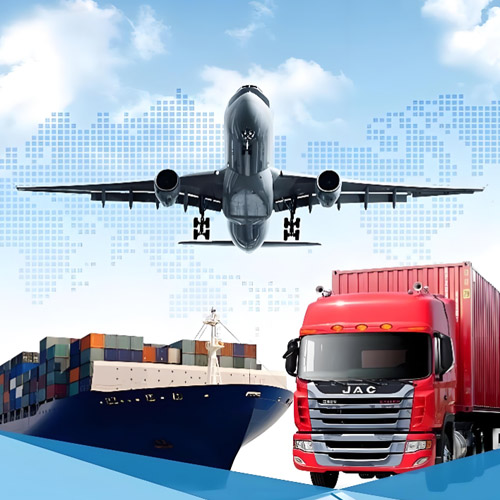
Import agency covers transportation modes such as sea freight, air freight, express delivery, and land freight. The main processes include contract signing, tracking and execution, document preparation, license processing, and customs declaration transportation.
Export agency services involve operations such as foreign exchange collection, customs declaration, and tax refund, and require the use of an agency company to verify documents. Usually, rights and responsibilities are clarified through the signing of a sales contract.
Import and export agents need to sign a written agreement to clarify the ownership of goods and avoid disputes.
When choosing an agent, priority should be given to enterprises with the ability to advance tax refunds and stable business volume to reduce financial risks. The customs declaration process requires the preparation of invoices, packing lists, verification forms, and other documents. The calculation of export tax refunds involves factors such as foreign currency exchange rates, value-added tax invoice amounts, and refund rates.
Import process
Overseas exporters entrust freight companies to transport goods to designated locations, and exporters pay freight companies according to certain freight charging standards. Freight companies provide high-quality services and ensure the safety of goods.According to different modes of transportation, there are operations such as import sea freight agency, import air freight agency, express import agency, and import land freight agency.
- 1. Sign export transaction contracts with foreign buyers on behalf of clients and prepare formal invoices;
- 2. Sign procurement contracts with domestic suppliers on behalf of clients;
- 3. Tracking the degree of contract execution on behalf of others;
- 4. According to the contract, formulate import documents (invoices, packing lists) on behalf of others;
- 5. Reporting import inspection and hygiene inspection on behalf of others;
- 6. Cooperate in processing import licenses required for import (automatic import license, heavy industry import license, import machinery and electrical certificate, etc.);
- 7. Cooperate in handling import license procedures;
- 8. Handle import customs declaration on behalf of others;
- 9. Agency for import transportation;
- 10. Handle import collection and settlement on behalf of others;
- 11. Handle import document regulations on behalf of others.
Customs Declaration
After the goods arrive at the destination port, a professional customs clearance company is needed to handle the import customs clearance business. Of course, the import agency will assist the import commissioning unit in preparing the customs declaration form, invoice, packing list, and provide the commissioning unit with a complete set of customs clearance documents. And prepare to provide an explanation of the customs declaration situation for customs inspection.Cost
It refers to the trade agent assisting the importer in importing goods, and being entrusted by the buyer to handle import business, providing various agency services to the parties involved, and charging agency fees. The agency fee is one percent of the total value of imported goods.Attention
The most important thing that import agents need to pay attention to is the ownership of the goods. After negotiating with the import agent, the owner of the goods must sign an import agency agreement to specify the ownership of the goods and avoid disputes arising from it. And import agents should also protect their rights and interests in a timely manner, in case of disputes and legal cases arising from not receiving the due benefits after releasing goods to customers.Export Process
Export agency is a process where domestic suppliers prepare the source of goods, negotiate and determine the relevant supply conditions with foreign procurement, and we handle the export procedures.As Follows:
- 1. Sign export transaction contracts with foreign buyers on behalf of clients and prepare formal invoices;
- 2. Sign procurement contracts with domestic suppliers on behalf of clients, and domestic suppliers provide value-added tax invoices;
- 3. Tracking the degree of contract execution on behalf of others;
- 4. According to the contract, formulate export documents (invoices, packing lists) on behalf of others;
- 5. Report export inspection and hygiene inspection on behalf of others;
- 6. Cooperate in processing the certificate of origin;
- 7. Cooperate in handling export approval procedures;
- 8. Handle export customs declaration on behalf of others;
- 9. Agency for export transportation;
- 10. Handle export foreign exchange collection, settlement, and verification on behalf of others;
- 11. Handle export tax refunds on behalf of others.
From the perspective of agents, general civil agents can be either natural persons or legal persons, while export agents must be businessmen, including both commercial legal persons and individual businessmen. There is no concept of "merchant" in Chinese law. The legal understanding of "merchant" should refer to legal entities, partnerships, sole proprietorships, and individual businesses that have been registered with the industry and commerce bureau, have established commercial accounts, possess corresponding professional knowledge, technical equipment, and funds, and engage in certain profit-making business activities. Moreover, in export agency, at least one of the principal, agent, or second party usually has business premises in different countries.
Customs Declaration
After the goods are delivered to the warehouse, a professional agency is needed to prepare the export customs declaration business based on the information provided by the client. Of course, they will assist the export client in preparing the customs declaration form, invoice, packing list, verification form, customs declaration power of attorney, and provide a complete set of customs declaration documents. And prepare to provide an explanation of the customs declaration situation for customs inspection.Cost
It refers to the trade agent assisting the exporter in exporting the goods. The trade agent is entrusted by the buyer to handle the export business, provide various agency services to the parties involved, and charge agency fees. The agency fee is one percent of the total value of export procurement.Invoicing and settlement involved in export agency
The amount of the value-added tax invoice issued by the factory is equal to the payment made by the export agent to the factoryRevenue=Expenditure+Profit
For export agents (assuming the value-added tax invoice is 17% and the export agent has not advanced sea freight and other fees):
Income=foreign currency * exchange rate+tax refund
Expenditure=Factory Due Payment
Profit=Agency fee
By substituting all the elements into the equation of "income=expenses+profit", it explains all the cost relationships in export agency: (the assumption above holds true)
Foreign currency * exchange rate+tax refund=factory due payment (referred to as "payment")+agency fee
Tax refund=Value added tax invoice amount/1.16 * Tax refund rate=Factory due payment (referred to as "payment")/1.16 * Tax refund rate
Substitute the second equation into the first equation to obtain
Foreign currency * exchange rate+payment/1.16 * tax refund rate=payment+agency fee
Organize this equation:
Payment * (1.16- tax refund rate)/1.16=foreign currency * exchange rate -
Please contact our professional consultant for specific detailed fees and process instructions.
Share: