

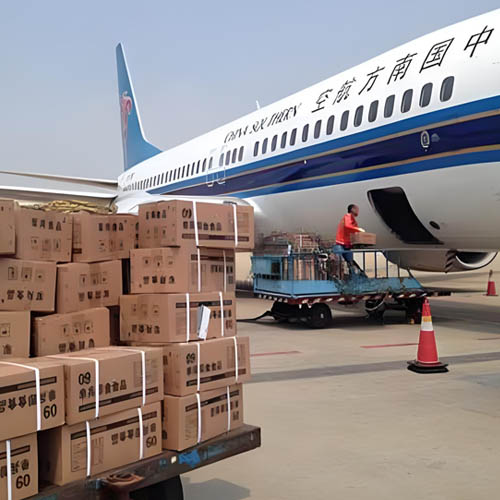
Your Reliable Air Freight Partner
As a leading international logistics company, HuaYueXingHai Logistics offers comprehensive air freight solutions designed to meet the unique needs of your business.
With our extensive network of air freight carriers in China, we ensure fast, reliable delivery of your goods to destinations across the globe. Whether you're shipping time-sensitive products or larger consignments, we have the expertise to handle your air freight needs efficiently and professionally.Our services include:
Direct flights from major international airports in China, ensuring prompt and secure delivery.Less-than-Container Load (LCL) air freight, offering flexible and cost-effective solutions for shipments of all sizes.
At HuaYueXingHai Logistics, we take the time to understand your specific requirements. By collaborating closely with you, we provide customized solutions that balance efficiency with cost-effectiveness.
Our unwavering commitment to quality service and customer satisfaction is at the core of everything we do.
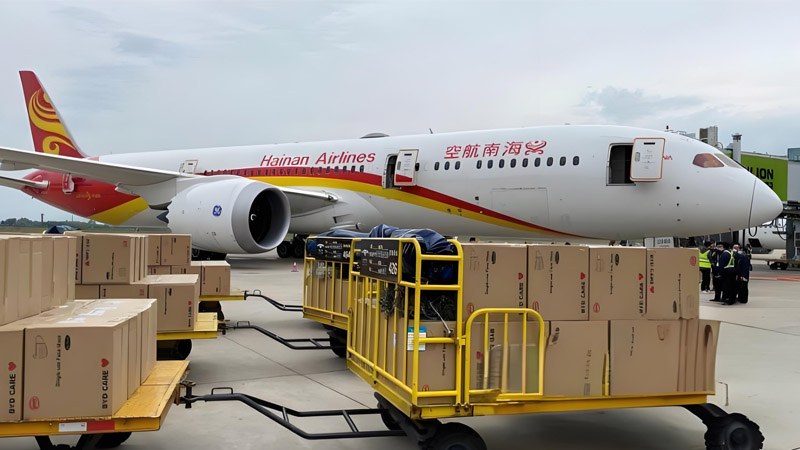
Major Airports In China: Key Hubs For Global Cargo Transportation
China’s vast network of airports offers excellent opportunities for logistics and cargo transportation. Selecting the right airport, based on proximity to your supplier or market, can significantly reduce transportation costs. Below are some of the major airports in China that are key players in international cargo handling.
1. Beijing Capital International Airport (PEK)
- Cargo Volume: Approx. 20,000 tons per year
- Major Trading Partners: United States, Japan, South Korea, Australia, Germany
- Strategic Importance: As the busiest airport in Asia and China’s largest air cargo hub, PEK serves as a vital international gateway, ideal for trans-Pacific and intra-Asian routes.
- Key Features: The airport has state-of-the-art facilities for handling all types of cargo, including pharmaceuticals, perishables, and hazardous goods.
- Business Suitability: With its extensive global connections, PEK is perfect for businesses involved in importing and exporting across the globe.
2. Shanghai Pudong International Airport (PVG)
- Cargo Volume: Over 36,000 tons per year
- Major Trading Partners: United States, Canada, Japan, South Korea, Germany, France, Italy, Australia
- Strategic Importance: PVG is the busiest airport in China and the third busiest in the world in terms of cargo volume. It plays a crucial role in Shanghai’s status as China’s economic center.
- Key Features: PVG is home to China’s first dedicated cargo terminal and serves as the Asia Pacific Hub for FedEx.
- Business Suitability: Ideal for businesses that require fast, time-sensitive transportation, as well as frequent shipments to high-demand international markets.
3. Guangzhou Baiyun International Airport (CAN)
- Cargo Volume: Over 2.6 million tons per year
- Major Trading Partners: United States, Saudi Arabia, UAE, Singapore, Hong Kong, Nigeria
- Strategic Importance: As a key hub for China Southern Airlines, located in the economically vital Pearl River Delta region, CAN is crucial for trade in southern China.
- Key Features: The airport boasts excellent processing facilities, offering smooth and efficient cargo handling.
- Business Suitability: Ideal for businesses looking to expand into the rapidly growing South China market.
4. Chengdu Shuangliu International Airport (CTU)
- Cargo Volume: Approximately 700,000 tons per year
- Major Trading Partners: United States, Germany, Japan, Australia, South Korea
- Strategic Importance: CTU serves as a central hub for western China, providing access to a growing consumer market in the region.
- Key Features: The airport houses major FedEx and DHL domestic hubs, supporting swift logistics operations.
- Business Suitability: Perfect for businesses targeting the untapped market potential of western China.
5. Shenzhen Baoan International Airport (SZX)
- Cargo Volume: Over 1 million tons per year
- Major Trading Partners: United States, Japan, Germany, Egypt, United Kingdom
- Strategic Importance: SZX is located in Shenzhen, one of China’s most affluent and innovative regions, making it a crucial hub for e-commerce logistics.
- Key Features: Modern, state-of-the-art cargo facilities, specifically designed for e-commerce shipping.
- Business Suitability: Excellent for businesses focusing on e-commerce or targeting high-income consumers in the region.
Air Freight Costs From China: Key Factors And Considerations
The cost of air freight from China can vary significantly based on several factors, such as the distance between the origin and destination airports, the weight and size of the cargo, the type of goods being shipped, and the urgency of the delivery. While air freight is generally more expensive than other modes of transportation (such as sea or land freight), it offers the key advantages of speed and reliability.Key Factors Affecting Air Freight Costs
Distance Between AirportsThe distance between the loading and unloading airports plays a crucial role in determining air freight costs. Longer distances typically result in higher costs due to factors such as fuel surcharges and additional transit points.
Cargo Weight and Size
Air freight rates are usually calculated based on either the weight or the size (volume) of the cargo, whichever is greater. Larger or heavier shipments tend to incur higher charges, as they require more space and resources to transport.
Type of Goods
The nature of the goods being shipped can impact the overall cost. Perishable items, pharmaceuticals, electronics, or hazardous materials often require special handling and packaging, which can lead to additional charges.
Urgency of Delivery
The faster the required delivery, the more expensive the air freight will likely be. Express services or same-day deliveries come with premium rates, while slower shipping options may reduce costs but extend delivery times.
Air Freight Vs. Other Modes Of Transport
Air Freight:Pros: Fast, reliable, and lower risk of damage. Ideal for time-sensitive shipments.
Cons: Higher cost compared to sea and land freight.
Sea Freight:
Pros: Cost-effective for large, non-urgent shipments, especially for bulk goods.
Cons: Slower delivery times.
Land Freight:
Pros: Suitable for regional shipments or short-distance transport.
Cons: Limited to specific routes and regions, less efficient for international shipping compared to air and sea transport.
How To Get An Accurate Air Freight Quote
To get an accurate estimate of air freight costs for your specific shipment, it's best to contact ShunShunFa Logistics. They will provide a customized quote based on factors like cargo size, weight, destination, and delivery urgency, ensuring that you get the most accurate and cost-effective solution for your needs.How To Reduce Air Freight Costs
Air freight can be a costly option for transporting goods, but there are several effective strategies you can implement to lower these expenses. Below are key approaches to help you reduce air freight costs while maintaining efficiency.1. Optimize Shipment Weight And Size
Air freight costs are typically determined by the weight and size of your cargo. The more you can reduce the weight or dimensions of your shipment, the more you’ll save on transportation costs.
2. Consolidate Shipments
If you have multiple smaller shipments going to the same destination, consider consolidating them into a single larger shipment.
Why It Works: Air freight rates generally become more cost-effective as the weight increases. The heavier the shipment, the lower the per-unit cost tends to be.
Weight Tiers: Air cargo costs often follow specific weight thresholds (e.g., 45kg, 100kg, 300kg, 500kg, 1000kg). Consolidating shipments allows you to reach higher weight categories, lowering your overall shipping cost.
3. Negotiate With Airlines
If your business ships large volumes of goods, consider negotiating directly with airlines for better rates.
4. Plan Ahead
Urgent or expedited shipments tend to be more expensive due to the need for faster processing and delivery.
Tip: Plan your shipments in advance and allow sufficient time for delivery. By doing so, you can take advantage of more cost-effective, less urgent shipping options.
5. Air Freight Forwarding Process: A Step-By-Step Overview
When you need to transport goods via air freight, working with an air freight forwarder is essential. The forwarder will manage all logistics and ensure your goods arrive at their destination on time and in compliance with regulations. Below is a step-by-step breakdown of the air freight forwarding process.
1. Pick Up Goods From The Supplier And Transport By Truck
The process begins with the pick-up of goods from the supplier’s address. The goods are then transported by truck to a nearby consolidation point or directly to the international airport, depending on the arrangement.
2. Packaging (If Required) And Delivery To The Nearest International Airport
If necessary, the goods are repackaged to comply with air freight standards. This may include securing the goods in suitable containers or boxes for safe transport. Afterward, the goods are delivered to the nearest international airport for further handling.
3. Customs Declaration
Before the goods can be shipped internationally, they must go through the export customs clearance process. The air freight forwarder takes care of submitting the required documentation—such as the commercial invoice, packing list, and export permits—to ensure the goods are cleared for export.
4. Air Freight Transport
Once cleared by customs, the goods are loaded onto the appropriate flight for transport to the destination country. The air freight leg typically involves a few hours to a few days, depending on the flight schedule and distance.
5. Customs Clearance At Destination (VAT And Other Taxes)
Upon arrival at the destination airport, the goods must undergo customs clearance in the importing country. The forwarder ensures that all necessary documentation is submitted and that any applicable import duties, VAT, or taxes are paid to facilitate smooth clearance.
6. Final Delivery To Your Address
Once the goods clear customs, they are ready for delivery to your final destination. Depending on your arrangement, the goods will either be delivered directly to your address or to a nearby warehouse for further processing or storage.
Understanding the air freight forwarding process is crucial for managing your logistics effectively. By being aware of each step— from pick-up to final delivery— you can ensure a smooth and efficient transportation process for your goods, while also staying informed about the necessary regulations.
How To Calculate The Billable Weight Of Air Freight From China
Air freight charges are typically based on weight, but the weight alone isn’t the only factor that determines shipping costs. Due to the limited cargo space in aircraft, shipping companies often charge based on the space your cargo occupies, especially if the goods are light but bulky. This is called volumetric weight.Volumetric weight helps airlines ensure profitability, even when transporting large, lightweight items that occupy significant space. Understanding the difference between actual weight and volumetric weight is crucial, as you may be charged based on volumetric weight without realizing it.
For more details on international air freight, please contact our professional international air freight logistics consultant.
Share: